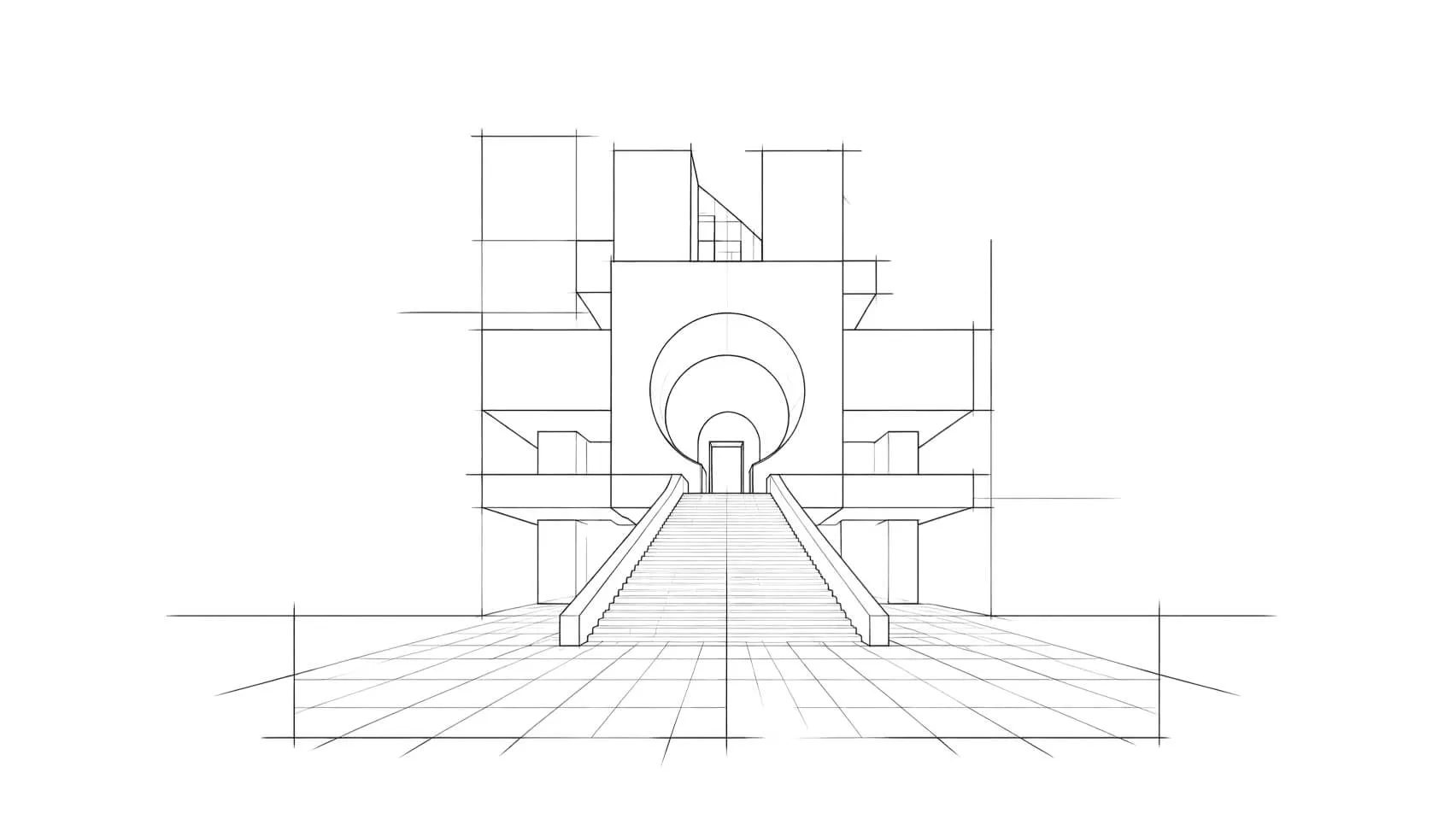

How to Read a Floor Plan People Actually Follow
Almost every household has, somewhere in a drawer, a floor plan from the builder or the architect — the accumulated record of a home's rooms and walls, rarely consulted. And almost every family, when a Vastu question comes up, quietly guesses at the directions instead of pulling that plan out, because reading it against true north takes longer than just pointing at a wall. The plan exists. It just doesn't get read. That gap is worth closing, and it's rarely closed by adding more paperwork.
Why a floor plan stops getting read
A floor plan stops being useful for a specific, predictable reason: the home changes faster than anyone re-checks it against direction. Every year adds a repainted wall, a moved cupboard, an extension built under time pressure with whatever layout made sense in one moment. Nobody goes back to confirm which room now sits in which zone, because that's the kind of check with no deadline attached to it. Over a few years, the plan becomes outdated, technically still true, and genuinely unhelpful to consult — which means the fastest path to an answer stops being "read the plan" and becomes "guess and hope."
Once that pattern sets in, it reinforces itself. Every guessed placement is one more small misalignment added to the home, making the next question even harder to answer confidently, making the next decision even more likely to be a guess rather than a reading.
What actually makes a floor plan get followed
True north beats everything else. A modest reading taken from a correctly oriented plan beats an elaborate one taken from a guessed direction. If someone can confirm north in under a minute and place the nine-zone grid on the plan, they will use it. If it takes rechecking four old documents and asking which compass reading is current, they'll go back to guessing — every time, regardless of how detailed the plan already is.
One governing direction per room, not a debate. The single biggest cause of confusion in a home is competing opinions — three family members, each citing a different rule for the same room, none aware the other two disagree. A reading with one clearly-sourced direction per room, deliberately checked against the plan, is more useful than ten half-remembered opinions with no way to tell which is correct.
Zone names that match how a household actually thinks. Vastu terminology often gets explained around how a scholar wants to organize the mandala, not around how a family instinctively thinks about "the kitchen" or "the front door." If the instinct is to ask about the kitchen and the answer arrives only as a Sanskrit zone name nobody remembers, the reading fails, and the guessing begins.
A visible, low-friction way to flag a genuine defect. Homes stay unaudited not because nobody notices something feels off, but because reporting it usually means finding someone, explaining what's wrong, and waiting — friction that makes "just live with it" the easier option nearly every time. A reading that makes it easy to flag a genuine concern, and that actually returns a cited defect and remedy, stays useful instead of gathering dust in the same drawer.
The remedy is the real work, not the reading
Taking an initial reading is a task with a clear scope and a defined end. Living by it is not — it's an ongoing habit with no natural deadline, which is exactly why it tends to get skipped once the first audit is done. Households that keep a reading genuinely useful over years, not just in the weeks after a big rearrangement, treat the remedy — moving, reorienting, rebalancing — as a standing practice with an owner, not a one-time exercise that eventually fades.
The payoff, measured correctly
A floor plan that actually gets read doesn't just save the time of guessing at a direction. It prevents the drift, the half-remembered rules, and the inconsistency that comes from every family member solving the same small question slightly differently. The real value isn't in the minutes saved on any single answer. It's in a home staying consistent with itself over time, instead of each rearrangement quietly reinventing its own version of a question the plan had already answered.




SEE WHAT A VASTU AUDIT FINDS IN YOUR HOME